
Treatment of prostate cancer
When treating prostate cancer, we have two main objectives: either to cure the tumour completely (curative treatment) or – if this is no longer possible – to keep it under control in the long term in order to maintain quality of life and life expectancy. The choice of treatment depends primarily on how far the cancer has already spread, how aggressive it is, and the patient’s general state of health.
For locally confined prostate cancer, there are several equally effective treatment options available, whereas systemic therapies are often necessary for advanced stages.
Active surveillance
In the case of less aggressive tumours detected at an early stage, direct treatment may be deferred initially. Instead, the condition is monitored closely. The aim is to avoid the side effects of treatment as long as the tumour shows no signs of progressing.
Active surveillance is particularly suitable for so-called low-risk tumours. Regular check-ups (PSA level, digital rectal examination, MRI and repeat biopsies) are crucial in this approach. Only when there are signs of progression is active treatment initiated. Studies show that the chances of survival in these cases are comparable to those with immediate surgery or radiotherapy.
Surgery (prostatectomy)
Surgical removal of the prostate is one of the most important curative treatment methods. It is primarily considered when the tumour is still confined to the prostate. During the procedure, adjacent structures such as the seminal vesicles are removed along with the prostate.
There are various surgical procedures, such as open surgery, minimally invasive (laparoscopic) techniques or robot-assisted procedures. Both the method and the surgeon’s experience are crucial to the success of the operation. After removal, the urethra is reconnected to the bladder. A catheter is often required temporarily until the connection has healed securely.
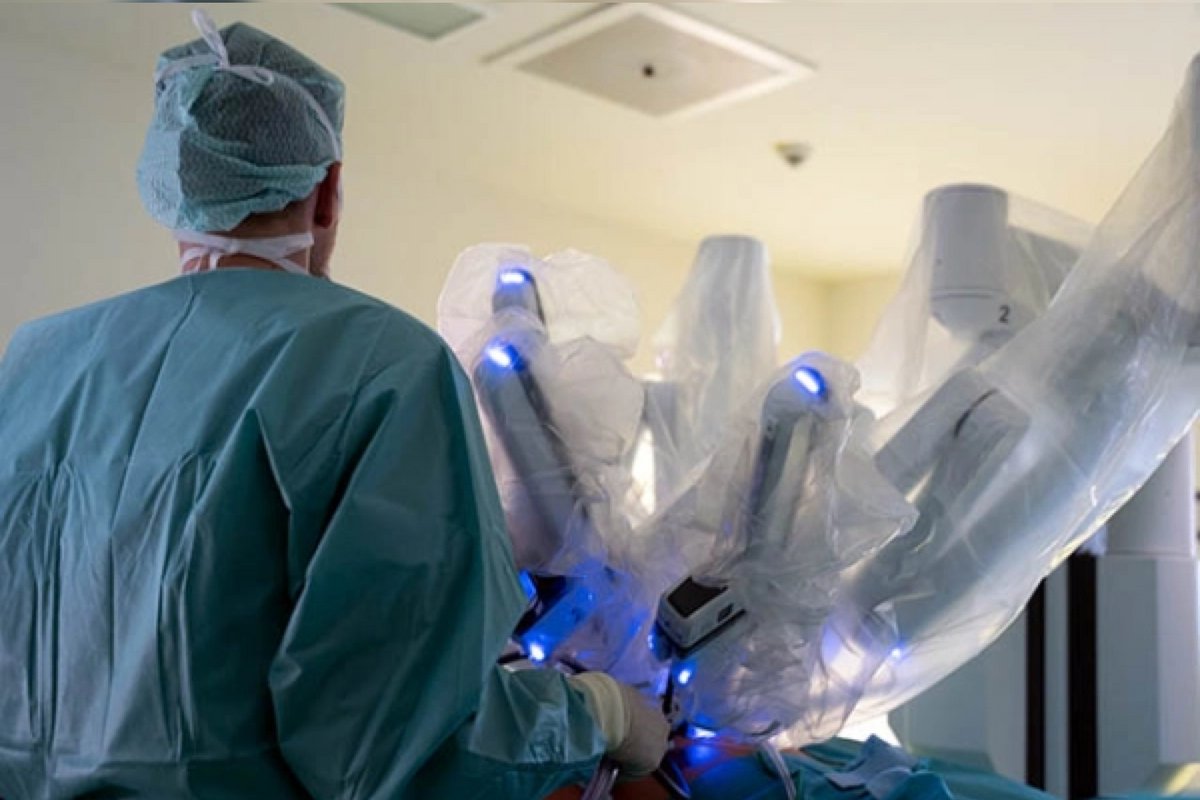
Robot-assisted surgery at the Munich-Planegg Urology Clinic
The majority of radical prostatectomies are performed at the Uro-Oncology Centre at the Munich-Planegg Clinic using robot-assisted surgery with the Da Vinci® system. This highly precise method enables a minimally invasive procedure involving small skin incisions, a high-resolution 3D view and maximum freedom of movement for the instruments. The combination of robot-assisted technology and surgical expertise means significantly reduced blood loss for patients, a lower likelihood of needing a blood transfusion, less post-operative pain, and faster recovery and mobilisation.
Side effects of prostatectomy
One potential issue is incontinence, which is usually temporary. Therefore, rehabilitation exercises may be beneficial after surgery to help the muscles regain their function. Depending on the individual case, it may take a few days or longer before the patient can fully control their bladder again – after twelve months, 95% of those affected are continent once more. In some cases, erectile function may also be impaired. Depending on age and the tumour, sexual function can be preserved in up to 80% of those affected.
Thanks to new, nerve-sparing surgical techniques and individual adaptation to the tumour findings, continence and erectile function can often be preserved.
Radiotherapy
Radiotherapy is an alternative to surgery and is equally effective for locally confined prostate cancer. It can also be used as an adjunct to surgery if risk factors are present.
The radiation damages the genetic material of the cancer cells, preventing them from dividing and causing them to die. Healthy cells are more resilient and can repair some of the damage. Treatment is usually carried out on an outpatient basis over several weeks, with daily sessions. Modern planning techniques ensure that the surrounding tissue is spared as much as possible.
Side effects of radiotherapy
Temporary side effects may occur during or after treatment, such as irritation of the bladder or bowel. Common symptoms include a frequent urge to urinate, a burning sensation when passing urine, or digestive problems. Long-term side effects are less common, but may include changes to the bladder or bowel. Overall, radiotherapy is now considered to be well tolerated, particularly thanks to modern technology.

State-of-the-art technology in radiotherapy at Pasing
We use state-of-the-art technology to ensure that your radiotherapy is as precise, gentle and safe as possible. To this end, we have two linear accelerators at our disposal: the TrueBeam and Halcyon models from the leading manufacturer Varian.
Both are latest-generation machines, which are used flexibly depending on the tumour and its location, in line with their respective technical advantages.
Brachytherapy: internal radiation therapy
A specific form of radiotherapy is brachytherapy. In this procedure, radioactive sources are placed directly into the prostate.
In LDR brachytherapy, small radioactive sources remain permanently in the body and emit radiation over a period of weeks. HDR brachytherapy, on the other hand, uses temporary radioactive sources in combination with external beam radiotherapy, particularly for more advanced tumours.
These procedures allow for highly targeted treatment, but are not suitable for all patients.
Watchful waiting
In the case of ‘watchful waiting’ – in contrast to active monitoring – curative treatment is deliberately avoided. This strategy is used primarily in older patients or in cases of severe comorbidities.
The focus here is on quality of life. Treatment is only initiated when symptoms arise, and is then primarily aimed at providing relief.
Hormone therapy
In advanced prostate cancer, particularly where metastases are present, hormone therapy plays a key role. It aims to suppress the effects of the male hormone testosterone, as this promotes the growth of cancer cells.
Treatment can be carried out using medication or surgery. The aim is not necessarily a cure, but rather to control the disease and alleviate symptoms.
Side effects are often similar to those experienced during the menopause, such as hot flushes, tiredness or mood swings.
Chemotherapy
If the disease continues to progress or no longer responds to hormone therapy, chemotherapy may be used. This involves administering drugs that destroy rapidly growing cells.
Treatment is usually carried out in cycles, with breaks in between to allow the body to recover. Side effects may include nausea, hair loss or a weakened immune system. However, modern supportive medications can often significantly reduce these effects.
Treatment of metastases
In advanced stages of the disease, treatment is also directed at secondary tumours. Various measures are used in such cases:
- targeted radiotherapy to relieve pain
- surgical procedures in the event of complications
- radionuclide therapy for bone metastases
- medicines to stabilise the bones
The primary aim of these measures is to improve quality of life and prevent complications.